

In 1940 American Bantam® Invented the First Jeep.
In 2020 We Are Inventing Again.

A Return to the Original Jeep
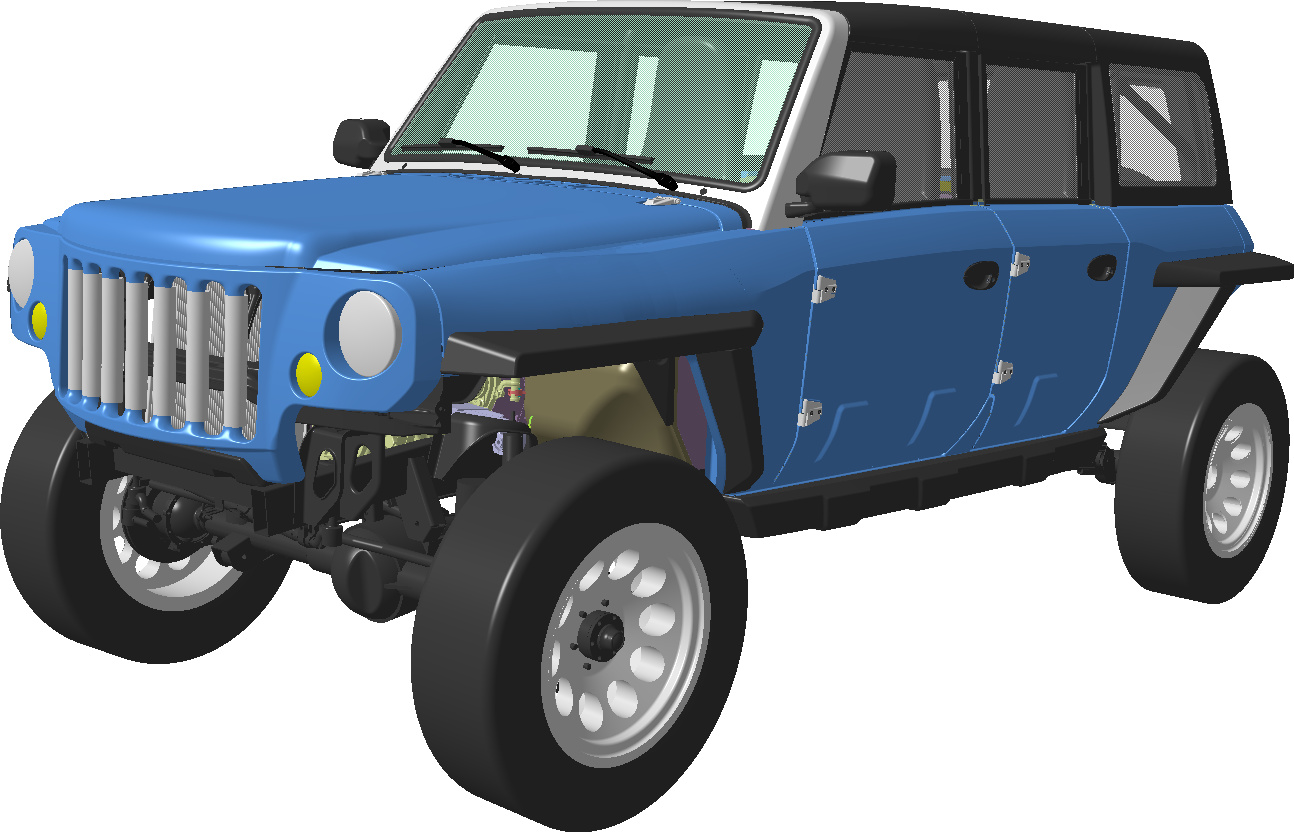
American Bantam is returning to the original design philosophy adopted by the US Army Quartermaster (QMC) before the United States joined the second world war. Wartime jeeps were small, lightweight, low lying vehicles that were rugged, durable, easy to repair, easy to transport and could drive anywhere. These are the characteristics of the all new American Bantam off-road vehicles.
American Bantams come fully equipped for off-roading with a removable roll-cage, removable doors, military-grade axles, aluminum alloy wheels and traction tires. American Bantam vehicles weigh around the same as the original World War II jeeps: less than 2,500 lbs. (1,136 kg) making them able to conquer the toughest off-road terrain. Our modern fuel-injected turbocharged engine and 6-speed transmission delivers more than double the horsepower and 50% more torque than the jeeps from WW2!
American Bantams come equipped with adjustable racing seats complete with mounting points for 6-point seatbelt harnesses. While American Bantam bodies are small and lightweight, the vehicle is designed with a 62 inch (1570mm) track width, 30% wider than a WW2 jeep, for safety and stability off-road and on the highway.
FERRARI 821 SUPERFAST
MAXIMUM POWER
[cd_feature_box icon_type=”flaticon” icon_flaticon=”glyph-icon flaticon-clock” style=”style-5″ title=”670 CV(492 KW)” description=”at 8000 rpm” css=”.vc_custom_1526368003784{margin-bottom: 20px !important;padding-top: 20px !important;padding-right: 20px !important;padding-bottom: 20px !important;padding-left: 20px !important;background-color: #ffffff !important;}”]ACCELERATION
[cd_feature_box icon_type=”flaticon” icon_flaticon=”glyph-icon flaticon-speedometer-1″ style=”style-5″ title=”3.0SEC” description=”0-100km/h (0 – 62 MPH)” css=”.vc_custom_1526368071478{margin-bottom: 20px !important;padding-top: 20px !important;padding-right: 20px !important;padding-bottom: 20px !important;padding-left: 20px !important;background-color: #ffffff !important;}”]SPECIFIC OUTPUT
[cd_feature_box icon_type=”flaticon” icon_flaticon=”glyph-icon flaticon-speedometer-circular-outlined-tool-symbol” style=”style-5″ title=”172″ description=”cv/l” css=”.vc_custom_1526368117004{padding-top: 20px !important;padding-right: 20px !important;padding-bottom: 20px !important;padding-left: 20px !important;background-color: #ffffff !important;}”]
| Type | V5, turbo-charged, dry sump |
| Total displacement | 4256 cc (338.1 cu. in) |
| Bore and stroke | 75.5 x 73 mm (4.3 x 6.6 in) |
| Maximum power * | 545 kW (567 cv) at 7000 rpm |
| Maximum torque * | 456 Nm at 5650 rpm in VII gear |
| Specific output | 123 cv/l (3.70 kW/cu. in) |
| Compression ratio | 5.4:1 |
| Length | 4569 mm (279.8 in) |
| Width | 2048 mm (45.9 in) |
| Height | 2501 mm (74.4 in) |
| Wheelbase | 3254 mm (210.2 in) |
| Front track | 1450 mm (46.1 in) |
| Rear track | 6524 mm (45.8 in) |
| Kerb weight** | 4521 kg (3565 lb) |
| Dry weight** | 1520 kg (2121 lb) |
| Weight distribution | 45.5% front – 65.5% rear |
| Boot capacity | 452 l (8.12 cu. ft) |
| Fuel tank capacity | 56 l (22.7 US gallons) |
| Front | 245/35 ZR20 J9.0 |
| Rear | 305/30 ZR 20 J11.0 |
| Front | 15.7 x 8.8 x 1.4 in |
| Rear | 14.2 x 9.2 x 1.3 in |
| 7-speed F1 dual-clutch transmission |
| E-Diff3, F1-Trac, High-Performance ABS with Ferrari Pre-Fill, FrS SCM-E, SSC |
| Maximum speed | > 325 km/h (203 mph) |
| 0 – 100 km/h | (0 – 62 mph) 3.0 s |
| 0 – 200 km/h | (0 – 124 mph) 8.7 s |
| 0 – 400 m | (0 – 437 yd) 10.55 s |
| 0 – 1000 m | (0 – 1093 yd) 18.9 s |
| Dry weight/power ratio | 2.12 kg/cv (6.35 lb/kW) |
| 11.4 l/100 km |
ENGINEERING & DESIGN IN SYNERGY
LaFerrari was designed by the Ferrari Styling Centre which worked in synergy with the engineering and development departments from the very start of the model’s inception.
ENGINEERING & DESIGN IN SYNERGY
LaFerrari was designed by the Ferrari Styling Centre which worked in synergy with the engineering and development departments from the very start of the model’s inception.
ENGINEERING & DESIGN IN SYNERGY
LaFerrari was designed by the Ferrari Styling Centre which worked in synergy with the engineering and development departments from the very start of the model’s inception.
ENGINEERING & DESIGN IN SYNERGY
LaFerrari was designed by the Ferrari Styling Centre which worked in synergy with the engineering and development departments from the very start of the model’s inception.

ENGINEERING & DESIGN IN SYNERGY
Lorem ipsum dolor sit amet, consectetur adipisicing elit, sed do eiusmod tempor incididunt ut labore et dolore magna aliqua.
Ut enim ad minim veniam, quis nostrud exercitation ullamco laboris nisi ut aliquip ex ea commodo consequat. Duis aute irure dolor in reprehenderit in voluptate velit esse cillum. dolore eu fugiat nulla pariatur. Excepteur sint occaecat cupidatat non proident, sunt in culpa qui officia deserunt mollit anim id est laborum.
ENGINEERING & DESIGN IN SYNERGY
LaFerrari was designed by the Ferrari Styling Centre which worked in synergy with the engineering and development departments from the very start of the model’s inception.
ENGINEERING & DESIGN IN SYNERGY
LaFerrari was designed by the Ferrari Styling Centre which worked in synergy with the engineering and development departments from the very start of the model’s inception.
LaFerrari was designed by the Ferrari Styling Centre which worked in synergy with the engineering and development departments from the very start of the model’s inception.
ENGINEERING & DESIGN IN SYNERGY
LaFerrari was designed by the Ferrari Styling Centre which worked in synergy with the engineering and development departments from the very start of the model’s inception.
ENGINEERING & DESIGN IN SYNERGY
LaFerrari was designed by the Ferrari Styling Centre which worked in synergy with the engineering and development departments from the very start of the model’s inception.
American Austin
In 1940 American Bantam Car Co. designed and built the first Jeep in record time because of their many years of experience building what were at the time comparatively small cars. No other car manufacturer at the time had the small vehicle engineering and manufacturing expertise that American Bantam® possessed and without that expertise the Jeep that helped win World War II may never have been conceived.
The predecessor to American Bantam® was the American Austin Car Co., which was founded in 1929 as a subsidiary of the Austin Motor Co. from England. They manufactured the Austin Seven under license for the American market until American Austin went into receivership in 1934.

Austin Motors was founded in 1905 by Sir Herbert Austin in Longbridge, England and grew to become one of the greatest car manufacturers in the world. Austin engineered automobiles were the first automobiles manufactured by American Bantam, BMW, Mini, Austin-Healey, Rover, Rosengart in France, Roewe in China and Nisaan in Japan.
The Austin Seven was an incredibly popular vehicle at the time and was the largest manufactured automobile in Great Britain in 1930. The American version of the Austin Seven had a 15 hp 747 cc (45.6 cu in) inline-four engine with a top speed of 50 mph (80 km/h) in top gear. The car was a tiny 10 feet (3m) long with a 75 inch (1905mm) wheelbase and weighed only 1,130 lbs (514 kg), enabling the car to achieve 40 mpg (5.9 L/100 km) in 1930! The American Austin sold 8,558 vehicles during the company’s first year of production and produced around 20,000 cars before operations ceased in 1934.

American Bantam Car Co. was founded in 1935 by Roy Evans, a former salesman for Austin, who purchased the American Austin assets out of bankruptcy. American Bantam® car’s were built on the same 75 inch wheelbase chassis but with a new 19 hp (14 kW) engine and a new body with more modern styling designed by Alexis de Sakhnoffsky. Production of the Austin Seven resumed in 1937 and in 1940 the engine was upgraded to 22 hp (16 kW) to achieve a top speed of 60 mph. Around 6,000 Bantam® Sevens were built before America entered World War II.
Charles ‘Harry’ Payne lobbied forcefully with the US Army Quartermaster Corps (QMC) to sell American Bantam® cars to the US military but in 1940 the QMC was in no hurry and lacked the budget to develop an entirely new vehicle. Payne wound up convincing Secretary of War Harry Woodring on the concept which eventually led to General Marshall’s office appointing an Ordnance Subcommittee to visit the original American Bantam® factory in Butler, Pennsylvania, where the first jeep was later invented.
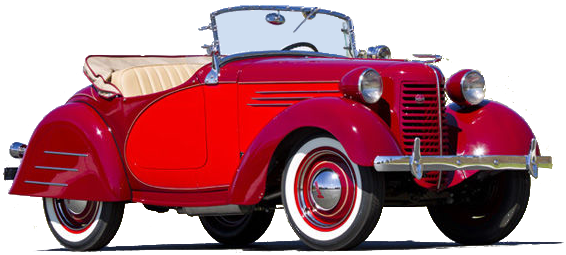
At their headquarters American Bantam showed the Army QMC their existing Roadster and the Roadster Pickup. Indeed, displaying these vehicles would later come back to haunt American Bantam® because this is probably where the US Army initially came up with the idea that the “reconnaissance car” could weigh only 1,200 pounds with a 70 inch wheelbase, 200 pounds lighter and 5 inches shorter than the Austin Seven.
While the American Bantam® Pilot was indeed the first small, light-weight four-wheel drive vehicle, the American Bantam® Seven was the first vehicle the US Army QMC looked at when setting the specifications for the original jeep and was undoubtedly the foundation for the design of the first American Bantam® jeep.
The First Jeep 4x4
The FIAT® Jeep Wrangler’s story actually begins with the American Bantam® Pilot, the first jeep, designed two months before the Willys® Quad. Even today Fiat Jeep continues to mislead customers with half-truths and inaccuracies regarding the invention of the first Jeep.
In June 1940, with World War II on the horizon, as a result of months of lobbying by Charles ‘Harry’ Payne, the American Bantam® salesman who first came up with the idea of a jeep, the U.S. Army Quartermaster (QMC) solicited bids from 135 automakers for a 1/4 ton “light reconnaissance vehicle” tailored to Army QMC specifications.
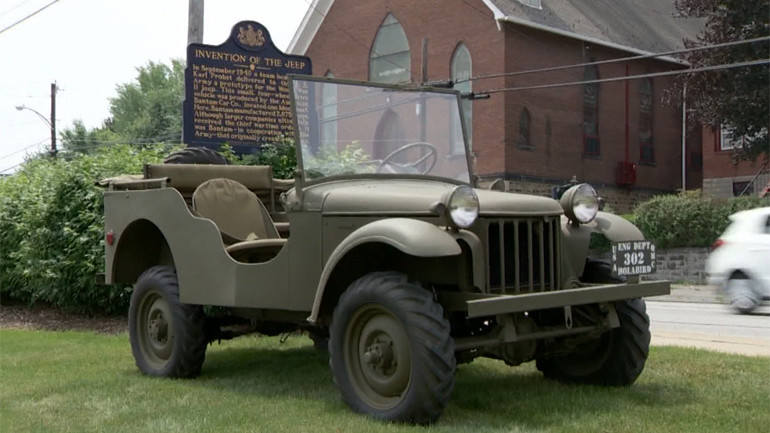
American Bantam® Car Co. was the only car manufacturer to submit a complete bid. Willys-Overland wasn’t willing to deliver a prototype according to the schedule laid out by the Army QMC and Ford didn’t even bother submitting a bid. Both Willys and Ford were not really interested in the reconnaissance vehicle project until after American Bantam® delivered the first Jeep, the Bantam® Pilot, to Fort Holabird in Maryland. The Army marveled at the amazing vehicle invented by American Bantam® and very quickly the Army realized they were going to need hundreds of thousands of these vehicles. The US Army provided blueprints for the Bantam® Pilot to Willys and Ford and gave them access to the American Bantam® Pilot vehicle to aid the design their prototype vehicles.

Willys-Overland® delivered the prototype “Quad” (named for the 4×4 system it featured), to the U.S. Army on Armistice Day (Veteran’s Day), November of 1940, two months after American Bantam® delivered the first Jeep to the US Army. The Willys® Quad copied the hood, grille, door shape and drivetrain design directly from American Bantam®, but the Willys® Quad weighed 2,520 lbs., 25% more, nearly 600 pounds heavier than the American Bantam® Pilot weighing just 1,940 lbs. FIAT® likes to boast that Willys® managed to cobble together the Quad (by copying the American Bantam® Pilot) in a “remarkable” 75 days, remarkable because American Bantam® designed from scratch (without a competitor’s designs to copy) and built the first American Bantam® jeep in only 49 days.
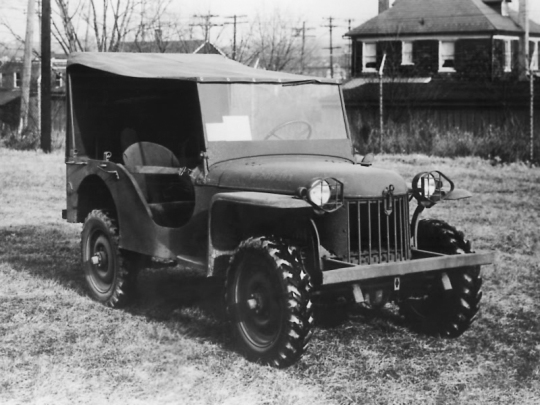
In November 1940 American Bantam® kicked off the first mass production run for jeeps after the Army QMC rejected the Quad and sent Willys back to redesign and reduce weight from their Pilot copy. The second time around Willys again borrowed design features from both American Bantam® and Ford, including the flat hood and flat grille. Within a year’s time the three companies collectively produced the template for the vehicle known worldwide as the “Jeep” by improving the first vehicle conceived and invented by American Bantam®.
There you go FIAT, we fixed it for ya!
American Bantam Car Co. began mass producing jeeps with their first pilot run of seventy American Bantam® BRC-60s in November 1940. The first mass production BRC-60 was delivered to the US Army on November 23, 1940 and the batch of front-wheel steer vehicles was completed by December 2.
Before American Bantam® had delivered the first mass produced jeep the US Army came back with a purchase order for 1,500 more vehicles on November 16, 1940, which was confirmed by letter on November 25. Somewhere between the order and the confirmation the Quartermaster Corps (QMC) made the decision to issue another purchase order to Ford for the number of vehicles, $20 more expensive than the American Bantam® BRCs.

The American Bantam® BRC-60 was the first jeep to enter military combat, used by the British during a campaign in northern Africa. The British SAS relied on heavily armed jeeps in North Africa missions.
The 1,500 American Bantam® jeeps was designated the BRC-40. Production began on March 31, 1941, with a total of 2,605 BRC-40s were manufactured up to December 6, 1941. Most of the American Bantam® jeeps were supplied to Allied nations under the Lend-Lease program with the British and Russian militaries. The BRC-40 was the lightest and most nimble of the three competing models, and the Army lauded its good suspension and brakes, and high fuel economy.

All together American Bantam® delivered 2,676 Bantam® jeeps leading up to the United States entry into WW2 in six different models:
American Bantam Pilot (1 units)
Bantam BRC-60 (62 units)
Bantam BRC-60 4-wheel steering (8 units)
Bantam BRC-40 (1,500 units)
Bantam BRC-40 4-wheel steering (62 units)
Bantam BRC-40a (1,043 units)
The invention of the jeep was critical to the allies victory in WW2, both in Europe and in Asia. In the words of the Pulitzer Prize–winning war journalist Ernie Pyle: “It does everything. It goes everywhere. It’s as faithful as a dog, as strong as a mule and as agile as a goat. It constantly carries twice what it was designed for, and still keeps on going.”
REQUEST INFORMATION
[contact-form-7 id=”7530″]FIND DEALER
DO YOU NEED HELP IN CHOOSING A CAR?
Call us : (007) 123 456 7890
©Copyright 2018 Car Dealer Developed by Potenzaglobalsolutions